For years, most crypto users didn't think much about on-chain privacy. The blockchain was open, transparent, and that was supposed to be the point.
Then something shifted.
Over the past few weeks, the conversation around privacy has come roaring back. Ethereum developers are actively discussing native private transactions. Zcash is back in the spotlight. And prominent voices like Arthur Hayes are openly talking about monetary privacy as if it's suddenly urgent again.
Why now?
The short answer is that the blockchain has become almost too transparent.
With the rise of chain analytics tools, wallet tracking services, and AI-driven data scraping, an address is no longer anonymous. Your transaction history, your asset balances, your interaction patterns — all of it can be pieced together by anyone with basic blockchain literacy and a few free tools.
This isn't just a problem for whales or institutions. It's a problem for anyone who values financial autonomy.
And that brings us to something most people overlook until it's too late: your seed phrase backup.
When Transparency Becomes a Liability
The same transparency that makes blockchains trustless also makes them dangerous. Every wallet you've ever used, every trade you've ever made, every protocol you've ever interacted with — it's all sitting there on a public ledger, permanently recorded and permanently visible.
Consider what happened in 2025. A mysterious wallet profited $88 million by shorting the market just hours before a major policy announcement. How? Someone had inside information, and the blockchain recorded the entire play in real time. Transparency didn't stop the exploitation — it just let everyone watch it happen.
Now imagine that level of visibility applied to your personal holdings.
Your employer could check what you're holding. A landlord could see your net worth before approving an application. A hacker could track exactly when you're most likely to let your guard down.
This isn't hypothetical. Chain analysis has become so sophisticated that even casual users are being profiled without their knowledge.
That's why protecting your access credentials has never been more critical. A proper seed phrase backup is the difference between sleeping well at night and waking up to an empty wallet.
The Privacy Tools That Actually Work
If you're concerned about on-chain privacy — and you should be — here's what you need to know.
Privacy-focused networks like Zcash and Monero offer built-in shielding that breaks the link between sender and receiver. No casual observer can trace your activity.
Mixing services and privacy wallets can help obfuscate your transaction history, though regulatory attitudes toward these tools vary by jurisdiction.
Fresh wallets for each use case is a low-tech but effective approach. Keep your savings wallet separate from your trading wallet. Never reuse addresses.
But here's the catch that nobody talks about: none of these privacy measures matter if your wallet's master key is compromised.
You can hide your transaction history behind the most sophisticated privacy tech in existence. You can rotate addresses after every single transaction. You can run your own node, use Tor, and jump through every privacy hoop available.
And then someone finds your seed phrase backup, written on a sticky note or saved in a phone screenshot.
All of it disappears in seconds.
Where Most People Go Wrong
The most common backup mistakes are also the most devastating.
Saving only one copy is the number one error. A house fire, a flood, or even a spilled drink can destroy your only backup.
Storing it digitally — in a notes app, a cloud service, or even an encrypted file on your computer — exposes your phrase to malware, cloud breaches, and a long list of other attack vectors.
Using paper alone might have made sense ten years ago. Today, paper is simply not durable enough for long-term storage. It burns. It dissolves. The ink fades.
The solution isn't complicated, but it requires intention.
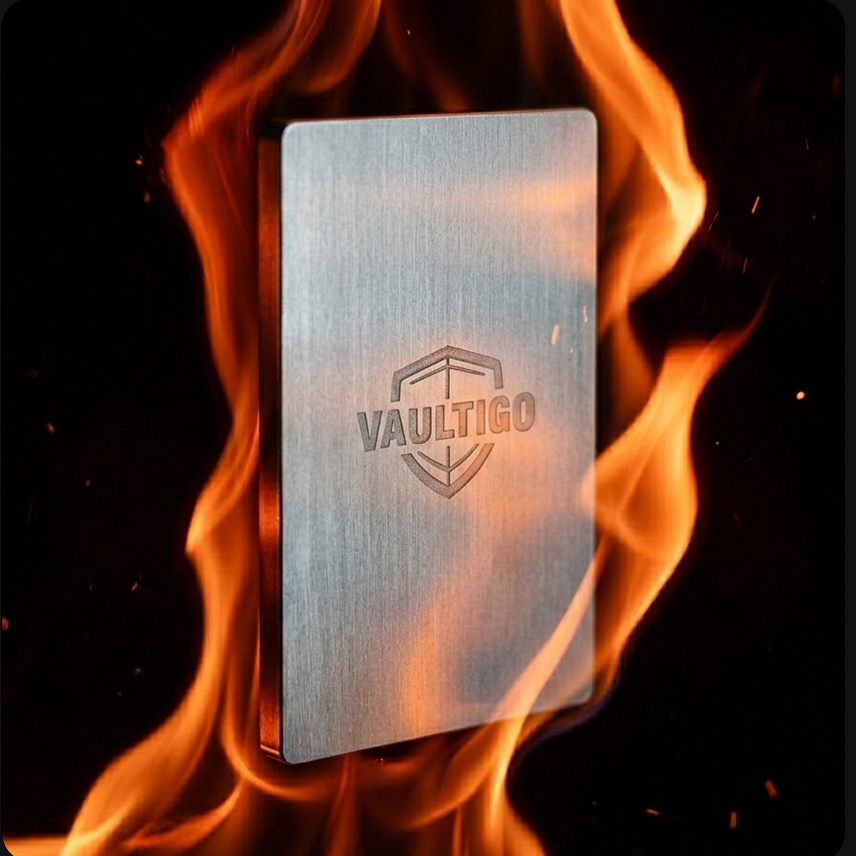
A metal seed phrase backup solves all three problems at once. It's fireproof up to temperatures that would turn paper to ash. It's waterproof. It doesn't degrade over decades of storage. And because it's physical rather than digital, it can't be remotely hacked.
For anyone holding meaningful value in crypto, moving from paper to metal isn't a luxury. It's a necessary upgrade.
The Regulatory Angle No One Mentions
There's another layer to this conversation that most privacy discussions completely ignore: regulatory tracking.
As stablecoins, RWAs (real-world assets), and institutional capital continue moving on-chain, the pressure to monitor and trace transactions will only increase. Governments don't need to ban crypto when they can simply track every move you make on a public ledger.
This is already happening. Blockchain forensics firms work with law enforcement agencies worldwide. Transaction monitoring has become standard practice for exchanges and even some DeFi protocols.
Your privacy isn't just about hiding from criminals anymore. It's about maintaining financial autonomy in a world where every financial system is increasingly monitored.
And that autonomy starts with controlling your own keys.
The Bottom Line
Privacy narratives come and go. Right now, they're back — and this time, the conversation feels different. More urgent. More practical.
But no matter how the narrative evolves, one thing doesn't change: the person who holds your seed phrase backup holds your funds.
Not a bank. Not a government. Not a smart contract.
You.
Or whoever finds your poorly secured backup.
Take a few minutes today to review how you're storing your recovery phrase. If it's on paper, buried in a drawer, or — worst of all — saved somewhere digital, it's time to upgrade.
Metal backups exist for a reason. Fire, flood, theft, and simple human error have taken more crypto than any hack ever has.
Don't let yours be next.