Ask any experienced cryptocurrency holder what keeps them awake at night. They will not mention price volatility. They will not mention exchange hacks. More often than not, they will point to something far more mundane yet far more terrifying: losing access to their own wallet.
The private keys that control your funds are not stored in some cloud server. They are not backed up by a bank. They exist solely in one place — the recovery phrase you were told to write down when you first set up your wallet.
That slip of paper, those twelve or twenty-four words, represents absolute control over your assets. Lose it, and no customer support line can help you. No password reset will save you. The funds simply become unreachable forever.
This is why establishing a reliable crypto seed backup is not an optional step in the self-custody journey. It is the entire foundation upon which ownership rests.
Why Most Backup Strategies Are Flawed
Walk into any crypto meetup and ask how people store their recovery phrases. You will hear a surprising range of answers, most of which fall into the same few categories.
Some people keep the paper slip inside a drawer. Others hide it between the pages of a book. A few have taken a photo with their phone — a practice so dangerous it is difficult to overstate.
Each of these methods shares the same fundamental flaw: fragility.
Paper burns. Paper gets wet. Paper fades. Paper gets mistaken for trash and thrown away by a well-meaning family member. None of these outcomes requires a sophisticated adversary. Everyday life is sufficient.
A proper crypto seed backup must survive conditions that paper cannot. It must withstand fire, flood, physical decay, and the simple passage of time. It must remain legible after years of storage without maintenance or inspection.
Very few materials meet these requirements. Metal is the clear answer.
The Problem With Digital Storage
Some users assume that digital backups offer a modern solution to an old problem. Encrypt your seed phrase, store it in the cloud, and call it secure.
This assumption is dangerous.
Any digital copy — whether on your phone, your computer, a USB drive, or a cloud service — expands the attack surface dramatically. Malware can capture keystrokes. Cloud breaches expose stored files. A compromised password manager leaks everything at once.
Moreover, digital files degrade in their own way. USB drives fail. Hard drives corrupt. Cloud services get shut down or change their terms.
A physical crypto seed backup offers something no digital method can match: complete isolation from remote threats. No hacker can steal what is not connected to the internet. No malware can compromise a piece of metal.
This is not a theoretical advantage. It is a fundamental difference in security architecture.
What Metal Solves
The case for metal backup materials rests on a few simple, verifiable properties.
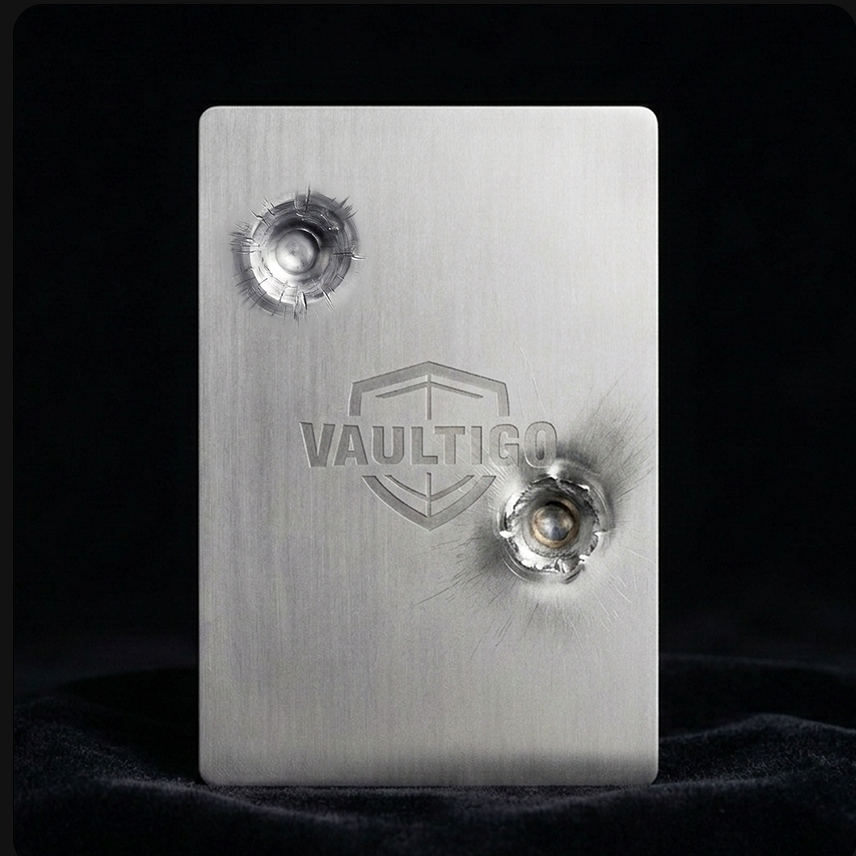
First, metal endures high temperatures. Fire ratings for quality steel plates often exceed 2,000 degrees Fahrenheit — far beyond what paper can survive. In a house fire, your paper backup is gone within seconds. A metal backup remains intact.
Second, metal ignores water. Floods, burst pipes, fire sprinklers — none of these will damage properly stamped or engraved letters. The information remains readable even after complete submersion.
Third, metal does not degrade over time. Paper becomes brittle. Ink fades. The words you wrote five years ago may be illegible today. Metal plates do not age. The letters stamped into their surface will remain unchanged decades from now.
Fourth, metal resists physical damage. A steel plate will not tear. It will not crumple. It will not be mistaken for recycling.
These properties make metal the gold standard for any serious crypto seed backup strategy. Paper is convenient. Metal is permanent.
Common Concerns Addressed
Two objections surface whenever this topic arises.
The first is cost. A metal backup kit costs between thirty and sixty dollars. For some, this feels like an unnecessary expense.
Consider what that thirty dollars protects. If your crypto holdings are worth even a few hundred dollars, the backup represents a small fraction of your total exposure. If your holdings are worth thousands, the ratio becomes even more favorable. You are paying for insurance against a low-probability, high-impact event.
The second objection is effort. Stamping letters into metal takes more time than writing on paper. This is true. It is also the point.
The effort required to create a metal backup reinforces the importance of what you are protecting. A process that takes fifteen minutes and demands concentration is less likely to be done carelessly. You will remember where you placed it. You will treat it with the seriousness it deserves.
How to Implement a Proper Backup System
A single metal plate is better than a single piece of paper. But genuine resilience requires more.
Keep at least two complete metal backups. Store them in separate physical locations. A fire that destroys your home should not also destroy your only backup. A flood in one part of town should leave the other copy untouched.
Do not rely on memory. Do not rely on a single hiding spot. Build redundancy into your system deliberately.
Label your backups clearly enough that a trusted family member could identify them in an emergency, but not so clearly that a thief would understand what they have found. This balance is important. Too much obscurity, and your heirs will never recover your funds. Too little, and you invite theft.
Test your crypto seed backup periodically. After stamping a new plate, recover a small test wallet from it before moving significant funds. Verify that every word is legible and correctly ordered. A mistake discovered early is a minor inconvenience. A mistake discovered after a disaster is a catastrophe.
The Cost of Neglect
Stories of lost recovery phrases are common in this industry. They rarely make headlines because there is no drama. No hack. No theft. Just a person who cannot access their own money.
Sometimes it is a forgotten password. Sometimes a misplaced piece of paper. Sometimes a natural disaster that no one anticipated.
In every case, the outcome is the same. The funds are still on the blockchain. They are just as real as they ever were. But they might as well be on the moon.
A proper crypto seed backup is not expensive. It is not complicated. It takes less than an hour to set up properly. And it protects against the most common way people actually lose access to their crypto.
Not hacking. Not exchange failures. Simple, preventable loss of the recovery phrase.
Final Thoughts
Self-custody comes with responsibilities. You cannot outsource security to a bank or an exchange. You cannot call a helpline when you forget your words.
What you can do is prepare.
Choose materials that endure. Build redundancy into your storage locations. Test your backups before you need them. And treat your recovery phrase with the seriousness it demands.
The blockchain does not care about your circumstances. It does not make exceptions for house fires or flooded basements or failing memory. Either you have your crypto seed backup, or you do not.
There is no in-between.